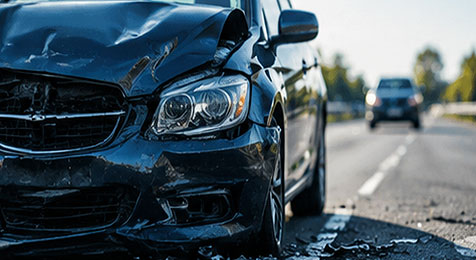
Two Separate Claims After Every Ontario Car Accident
Ontario operates a hybrid auto-insurance system. After a serious collision you almost always have two distinct claims running at the same time, governed by different rules, deadlines, and decision-makers. Understanding both is the difference between a partial recovery and full compensation.
The first is your accident benefits (SABS) claim — a no-fault claim against your own insurer for medical, rehabilitation, attendant care, and income replacement, available regardless of who caused the crash. The second is your tort claim — a lawsuit against the at-fault driver for the losses your benefits do not cover, including pain and suffering and the full value of lost income.
Act within 7 days. You must notify your accident-benefits insurer within seven days of the collision (or as soon as practicable), and file the OCF-1 Application within 30 days of receiving the forms. Missing these deadlines can jeopardize your benefits. Call us before you speak to any adjuster.
Your Accident Benefits (SABS) Claim
Accident benefits are paid under the Statutory Accident Benefits Schedule (O. Reg. 34/10) and are available no matter who was at fault — even if you caused the accident. Depending on the severity of your injuries, these benefits can include:
- Medical and rehabilitation benefits — treatment, assistive devices, and rehabilitation not covered by OHIP.
- Attendant care benefits — payment for personal care if you cannot care for yourself.
- Income replacement, non-earner, or caregiver benefits — partial replacement of lost income or support if you cannot work or care for dependants.
- Housekeeping, home maintenance, and other expense benefits for qualifying claimants.
Benefit limits depend on the classification of your injury. The most serious injuries qualify for a catastrophic impairment designation, which dramatically increases the medical/rehabilitation and attendant-care limits. We pursue that designation from day one where the injuries warrant it.
The Tort Claim Against the At-Fault Driver
Accident benefits do not compensate you for everything. To recover damages for pain and suffering and the portion of your income loss above the no-fault cap, you must sue the at-fault driver. Ontario law imposes a statutory threshold: to recover non-pecuniary damages (pain and suffering) you must prove a permanent, serious impairment of an important physical, mental, or psychological function, and a statutory deductible is applied to awards below a set amount. We build the medical record needed to clear that threshold and defeat the deductible argument.
Fault, the Deductible, and Shared Responsibility
Ontario applies contributory negligence under the Negligence Act. Being partly at fault does not bar your claim — your damages are simply reduced by your percentage of responsibility. Even a driver found 50% at fault may recover half of their assessed damages. Insurers routinely overstate a claimant's share of fault to reduce payouts; we contest those allegations with collision-reconstruction and independent evidence.
Uninsured & Underinsured Drivers
If the at-fault driver was uninsured, underinsured, or fled the scene, you are not without recourse. You may claim under the uninsured/underinsured motorist coverage in your own policy (OPCF 44R family-protection endorsement), and the Motor Vehicle Accident Claims Fund exists as a last resort for collisions involving unidentified or uninsured vehicles.
What To Do After a Collision
- Call 911 and report the collision; obtain a police report or event number.
- Seek medical attention immediately, even if you feel "fine" — many serious injuries surface days later.
- Photograph the scene, vehicles, road conditions, and your visible injuries.
- Exchange insurance and contact details; collect witness names and numbers.
- Do not give a recorded statement to any insurer before getting legal advice.
- Keep every receipt, prescription, and record of missed work.
- Call Azimi Law before signing anything from an adjuster.
How Azimi Law Builds Your Case
Protect Benefits
We file your accident-benefits forms correctly and on time so treatment is funded immediately.
Build the Record
We retain and fund medical, vocational, and engineering experts to document the full extent of your injuries.
Pursue the Tort Claim
We issue the lawsuit, quantify every head of damage, and negotiate from a position of trial-readiness.
Resolve or Try
Most cases settle — but if the insurer refuses fair value, we are prepared to take your case to trial.
Compensation You May Recover
A properly prosecuted car-accident claim can include: pain and suffering (non-pecuniary damages); past and future income loss and loss of earning capacity; the cost of future medical care, rehabilitation, and attendant care; housekeeping and home-maintenance costs; out-of-pocket expenses; and, for family members, derivative Family Law Act claims for loss of care, guidance, and companionship.