Why Motorcycle Claims Are Different
A motorcyclist has no crumple zone, airbag, or steel cage. The same impact that leaves a car occupant shaken can leave a rider with catastrophic, life-altering injuries — traumatic brain injury, spinal cord damage, multiple fractures, road rash requiring grafts, and amputation. Because the stakes are so high, motorcycle claims demand counsel who understand both the medicine and the unfair assumptions riders face.
Like every Ontario motor-vehicle claim, a motorcycle crash gives rise to two claims: a no-fault accident-benefits (SABS) claim against your own insurer, and a tort claim against the at-fault driver for pain and suffering and uncovered losses. We pursue both in parallel.
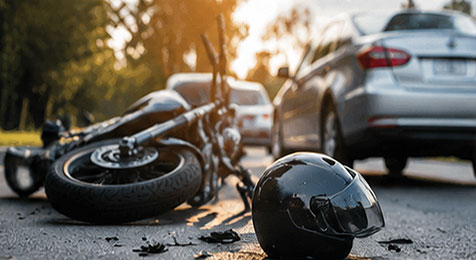
Preserve the evidence. Do not repair or dispose of the motorcycle, helmet, or riding gear. They are critical evidence of impact forces and whether you wore protective equipment. Photograph everything and store it safely.
Overcoming the Bias Against Riders
Insurers and defence counsel often start from the assumption that the rider was speeding, lane-splitting, or otherwise reckless. That bias can unfairly inflate the allegation of contributory fault and shrink a settlement. We counter it with hard evidence — collision reconstruction, ECU/telematics data where available, dash-cam and CCTV footage, and witness statements — to establish the true cause of the crash.
Common Causes We Investigate
- Left-turning drivers who fail to yield to an oncoming motorcycle.
- Drivers who change lanes into a rider or fail to check blind spots.
- Vehicles pulling out from driveways or side streets.
- Dangerous road conditions — potholes, gravel, poor maintenance, or defective design (which can support a claim against a municipality or contractor).
- Distracted and impaired driving.
Fault and Contributory Negligence
Under the Negligence Act, being assigned some fault does not end your claim — it reduces your damages by your percentage of responsibility. Wearing a helmet and proper gear, riding within the speed limit, and lawful lane positioning all strengthen your position. We rigorously contest exaggerated fault allegations.
Compensation for Injured Riders
A serious motorcycle claim may recover accident benefits for medical care, rehabilitation, and attendant care; income replacement; pain and suffering; past and future income loss; the cost of future care and home modifications; and, for the most severe injuries, the enhanced limits that flow from a catastrophic-impairment designation. Family members may also have derivative Family Law Act claims.